Initial C-Tech Rig

The North West Development Agency was offering funding for a range of values; we successfully bid for a £15,000 Innovation Voucher, as we met the technological and societal selection criteria.
The Voucher had to be spent with a local Research and Development company. After discussions and engagement, we chose to work with C-Tech Innovation, based in Capenhurst.


With the basic demonstrator working, and a solid cardinal point specification, it was agreed that they would use these to build a multi-configurable rig to replicate the test results achieved to date and independently assess the effectiveness of the concept.
Using plastic pipes and connectors, movable hanger mountings and frames, and variable water pressures and flow rates, the configurable arrangements allowed nozzles, sprays, pressures, hangers, and spacings to be varied, accommodating the differing test requirements.

.jpg)
Testing Regime
The trials used a conventional liquid detergent, Surf, Vanish Oxi Action, and Teccare anti-microbial treatments as the cleansing agents.
Key measures of the test looked at the speed and depth of the liquid detergent/water mix penetration and distribution, across a range of natural and synthetic fabrics and materials, at a selection of water temperatures.
C-Tech use industry standard Patch Salt Wash tests, whereby a known amount of a typical stain (coffee, brown sauce, etc.) is introduced onto a piece of clothing, at a specific point.
The density of the stain is measured at periodic intervals, with various combinations of materials, cleansing agents, concentrations, temperatures, pressures, spray densities, and hanger arrangements.
Testing Results
The trials used varying combinations of dosages for detergent, Oxi, and anti-microbial liquids, to ensure a balance of agents and to show that cleaning wasn't achieved through unsustainable high concentrations.
The results showed that the rig demonstrated consistent cleaning above the 90% success threshold.
It was effective at the typical range of water temperatures and cycle times, for the mixture of natural and synthetic materials, at a selection of water temperatures; the procedures and results matched the expectations of our point of contact within Unilever.
An early proposal was to allow the hangers to disperse water inside the clothes. This added complexity was removed following experimentation and assessment of some IPR Prior Art.
Further analysis of soak times and cleansing effectiveness showed that the optimal gap between hangers was 30mm. We have kept this gap through our subsequent work, demonstrating the thoroughness and capability of C-Tech's testing.
This evidence was used for a successful follow up UK Government R&D Grant application, this time for a total value of £160k

There have been personal, financial and organisational challenges along the way, these are detailed within the relevant sections of the website.
A decision was made to proceed with Kickstarter crowdfunding, to allow us to progress, in the difficult environment.
Without funding or investment, we can’t deliver this revolutionary product, which has the potential to transform the lives of wheelchair and limited mobility users around the world. The Lead Prototype will remain an example of unfulfilled opportunity and we don’t want that, Joe at least, deserves better!
Design

Testing Results
One of our Project Partners, the Gatsby Trust, had undertaken work with Echo Brand Design and felt we would benefit from engagement with them, as they excelled at both design and branding!
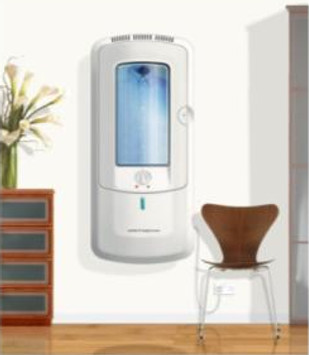
They took the basic principles and form from our initial demonstrator, expanding the brief to determine deployment situations—a washing machine not in the kitchen or utility room, for example—to produce stunning visualisations and an identity.
The use of an iPad/mobile phone form was significant to demonstrate a paradigm shift from typical current washing machines— it looks different, it works differently. Echo Brand Design had given Brompton Washscape a face, and they would add further vital contributions as the relationship matured.
IPR
After filing for a Japanese Patent in 2006, the Patent was granted in 2012.
The process is the same as other nations, were Prior Art is presented, challenged dismissed or referenced.
The key difficulty and cost obviously related to the translation requirements, of understanding and capturing the nuances written in someone else's primary language. That made us proud to have succeeded on all fronts, in addition, the Japanese granting document is a work of art.

How your pledge could impact our research
Your support and funding will allow us to ensure that the washing machine is compliant with all relevant Disability and Consumer goods requirements and standards.


